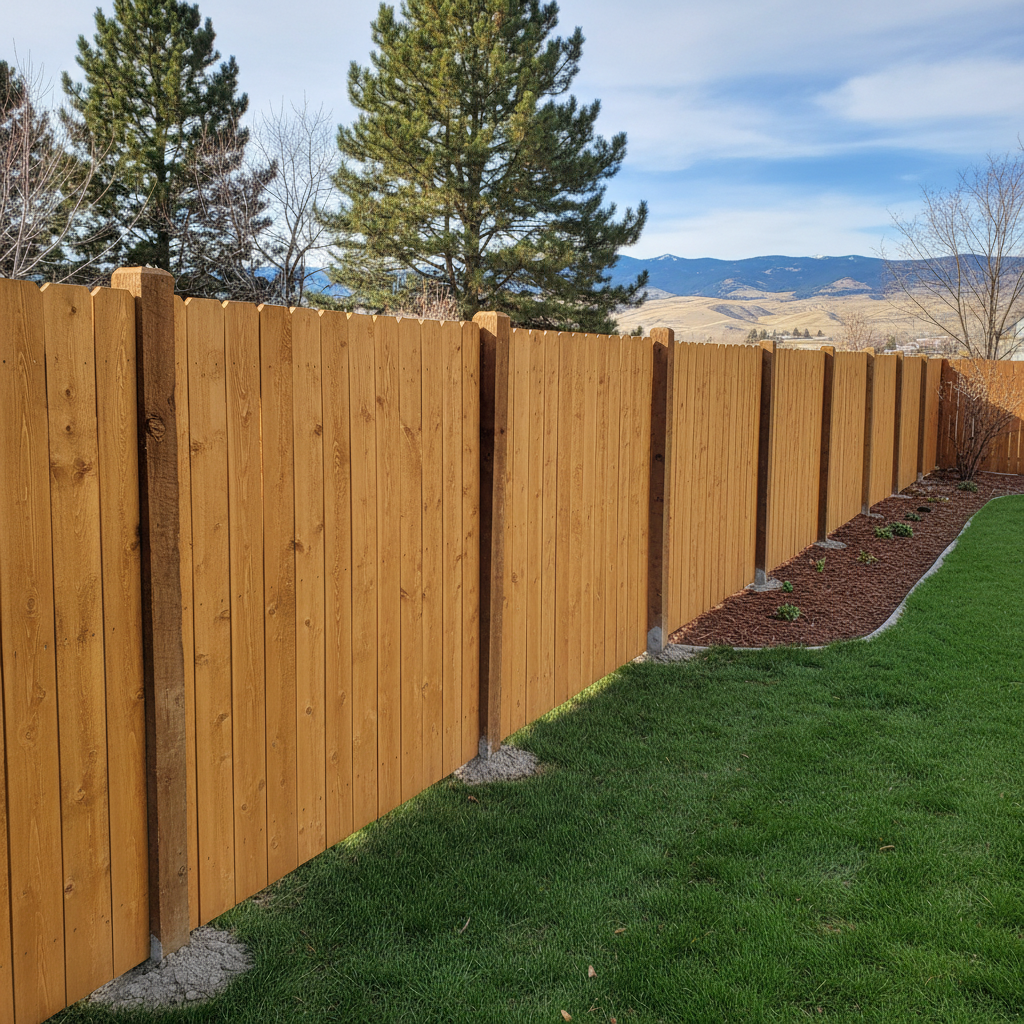
So, your fence has seen better days, right? Maybe a post is leaning, or some boards are just rotting away. That happens, especially with our Billings weather – those harsh winters and hot summers really put a fence through its paces. You decide it's time for a repair. Good call. But here's where I often see homeowners stumble, and honestly, end up regretting their choices.
Mistake #1: Patching a Dying Fence
This is probably the biggest one out there. You've got a fence that's 15, 20, maybe even 25 years old. The posts are soft, the rails are sagging, and half the pickets are warped or split. But instead of replacing it, you decide to patch it up. You swap out a few posts here, a few boards there. What happens next? Six months later, the *next* weakest part fails. Then you're patching again. It's like putting a tiny band-aid on a broken leg, isn't it? You're constantly chasing problems, spending money piece by piece, and you never really have a solid, good-looking fence.
I get it, a full replacement can feel like a huge investment. But if your fence is truly at the end of its life, those small repairs just delay the inevitable. And often, they cost you more in the long run than if you'd simply done it right the first time. Sometimes, you just gotta cut your losses and start fresh.
Mistake #2: Not Addressing the Root Cause
A leaning post doesn't just lean for fun, you know. There's always a reason. Is it rot at the base? Was it set improperly? Did the ground heave during a freeze-thaw cycle, which we see plenty of around here, especially in areas with clay soil like parts of the Heights? If you just straighten the post and don't fix *why* it leaned, it's going to lean again. Or worse, the next big storm will knock it right over.
Same goes for sagging gates. It's rarely just the gate itself; it's usually the post it's attached to, or the hinges, or how it was originally installed. A good repair means diagnosing the actual problem, not just fixing the symptom. You want a lasting fix, not a temporary Band-Aid.
Mistake #3: Going with the Cheapest Bid Without Asking Questions
Everyone wants to save a buck. I totally understand that impulse. But when it comes to fence repair, the cheapest bid can often turn into the most expensive mistake. I've seen guys come in, offer a ridiculously low price, and then either do shoddy work, use inferior materials, or just disappear halfway through the job. It's frustrating for everyone involved.
When you're getting quotes, don't just look at the number. Ask about:
- What materials they're using. Are they pressure-treated posts? What gauge of metal?
- How they plan to set the posts. Are they using concrete? How deep?
- Their warranty. What does it cover? How long?
- References. Can they provide some local folks you can call?
- Insurance. Are they licensed and insured? This is huge for your protection.
A reputable company, like Billings Fencing Company, will be transparent about all of this. We're not just trying to get the job; we're trying to do it right so you don't have to call us back for the same problem next year.
Mistake #4: DIYing Beyond Your Skill Level
Look, I'm all for a good DIY project. If you're handy and it's a simple board replacement, go for it! But replacing a main gate post, or dealing with a whole section of fence that's fallen over? That can be more involved than you think. You need the right tools, the right materials, and a good understanding of how a fence is supposed to be built to stand up to our Montana winds.
I've seen homeowners try to tackle a big repair, only to get halfway through, realize it's too much, and then call us in to fix their repair *and* the original problem. It ends up costing them more time, more frustration, and more money than if they'd just called a pro from the start.
Know your limits. Sometimes, paying for expertise saves you a lot of headache and ensures the job gets done right the first time.